Wednesday, 18 June 2014

Beautiful oak wood floor restored!

Art of Clean is part of the Ultimate floor sanding and restored wood floor in Cambridgeshire.

See below the amazing results:


Tuesday, 13 May 2014

Sunday, 20 April 2014

Parquet Flooring sanding in St George's Church in Chesterton Cambridge


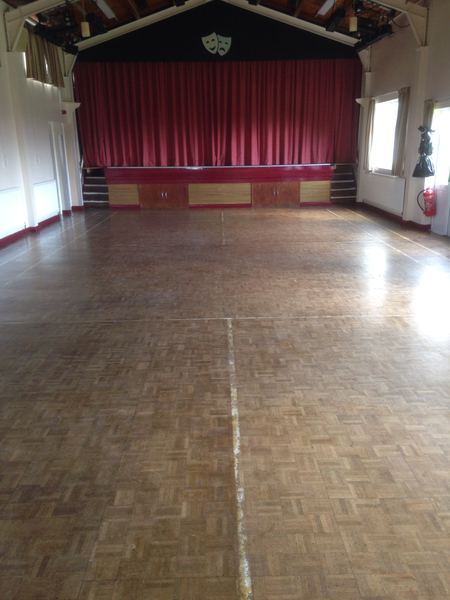
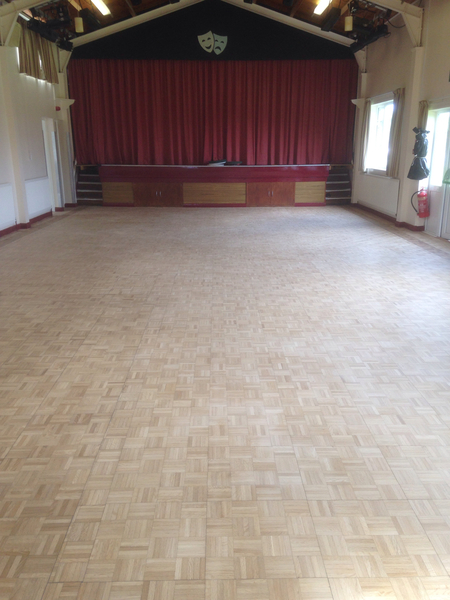
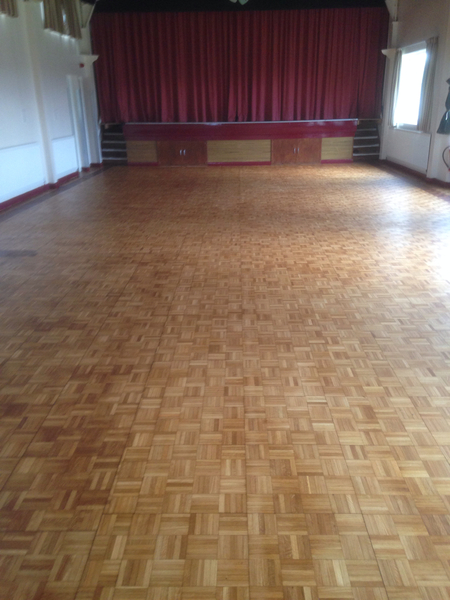
We sanded wood floors at the vicarage of St George’s church Chesterton a few months ago. Following this work we were asked if we could help with a problem Parquet floor made of pine in the Church hall. When we first looked at the floor it was not clear if we will get the desired effect on the parquet pine floor.

The wood floor was extremely worn in places and we could not work out why some blocks in the parquet floor was so badly worn down while others right next to it where still in good order. The whole wood floor was very dark and very dried out. The floor was laid in the 1940’s so we knew it was exposed to a lot of wear and tear.We determined it was a tong and groove wood block floor and we had to be extremely careful not to sand too much wood away otherwise the blocks will come lose.We also noticed a thick layer of build-up along the sides of the wood floor in the hall. It did appear to be old wax residues though we had to be sure.

Some older floors laid between 1940 and 1970 and sometimes even later can contain asbestos. We therefore called in an asbestos testing firm to test the floor for the presence of asbestos. It is not only to safeguard our floor sanding crew but also to ensure a safe environment for the people who use the church hall.We started the sanding of the wood floor and immediately discovered why some blocks worn so fast. Repairs were carried out on the floor and the replacement blocks that were used was a soft pine whereas the original floor is made up of Douglas fir wood blocks. Douglas Fir is a harder and more dense type of pine. It also appears as a darker orange brown coloured wood. Continue on the next post


In the after photos you will notice lighter blocks in the floor that are the blocks that got replaced.To secure the future of the parquet wood floor in the church hall in Chesterton Cambridge – we applied Pallmann Magic Oil to the Parquet wood floor.This will allow for minimal future sanding on the floor as it can be cleaned back and re-oiled to give it a new lease of life. The parquet wood floor can also be lightly sanded back and re-oiled if it starts to wear out. Another benefit in oiling parquet wood floors like this one in Chesterton Cambridge is that localised repairs can be carried out.

If an item of furniture gets dragged on the floor and cause a deep scratch – this can be sanded out and a fresh coating of oil can be applied over the area. There will be no bed to sand the whole floor again.

Tuesday, 1 April 2014

Lovely parquet sanded in Cambridge

Have a look at this video. You can see how we sand the parquet flooring. We also apply hard wax oil that makes the floor looks natural.


Do I protect my wooden floor with hard wax oil or lacquer?

This is quite a common question our customers ask us at Art of Clean, professional floor cleaners in Cambridge. This really depends on the type of finish you would like to achieve.

At Art of Clean we would normally discuss these options with you on our initial inspection of your wooden floor. Hard wax oils contain a mixture of oil and wax, which completely saturates into your timber flooring. Which means that no other liquid can be absorbed into your wooden floors, so if you were to spill any drinks, occidentally tip up your bucket of cleaning water onto the surface then none of this would go into your lovely wooden floor.The wax element of the hard wax oil, protects the surface from small scratches to the wood. Hard wax oil finishes are generally popular with our customer’s wooden floor cleaning requirements in and around Cambridge, as they are the easiest to maintain.

The hard wax oil also comes in various shades and colours, and offers three different types of sheen finishes.Lacquers on the other hand act in a slightly different way, rather than absorbing into the wooden surface of your floor, it will sit on the surface.The type of lacquers we use at Art of Clean in Cambridge, have flexible qualities, so rather than drying into a solid rigid surface, the lacquer will flex with the timber when it is scratched or dented.

This type of finish is harder to maintain, as although it is durable, if you need to touch up and scratches, it’s much harder. There are also only a two different types of finishes available too.We realise at Art of Clean that it all comes down to a question of taste, and as hard wood flooring cleaning experts we will be happy to help you choose the most suitable finish for your hardwood floor, so why not give us a call on 01223 863632.

Sunday, 26 January 2014

Commercial parquet wood floor restoration with Art of Clean

We've had some great floor sanding and oiling/polishing jobs lately in Cambridge, Essex, Hertfordshire, Suffolk and beyond.

Take a look at the images below to see the amazing transformations our technicians have been working on lately……

Here are some images of a parquet floor restoration the team completed in Leicester.

Pre-sanding

Post-sanding

Post-oiling


At Art of Clean we understand how a well finished floor can set off a whole room, giving your floorboards a new lease of life and increasing the lifespan of the timber.  Refinishing wood floors is one of our specialties, and we are trained and affiliated with the Ultimate Floor Sanding Company.  If you would like to talk to us about our services, please call our friendly team on 01223 863632 or visit www.artofclean.co.uk

Tuesday, 10 December 2013

Parquet floor filling in Cambridge


Although it’s not always necessary we sometimes have to fill the gaps between the boards before sanding, here is a recent floor where we had to fill the gaps between the boards, please pics before and after. The process is quite simple and it can really make a difference to a floor. If the floor has gaps of 2mm max we will be able to create mix of fine sand with resin (an alcohol based product is better than other solvents), and then we fill the gaps in the wooden floor, we would strongly recommend that we fill the gaps in the entire floor so that there are no parts which stand out afterwards as being different. However we can only fill the gaps if the floor is solid, i.e situated on a concrete floor, as if the floor is placed on a flexible surface it can cause movement and the filler will come out over time. But our specialised team will be able to offer advice on whether it is a viable option for your floor. If the gaps are more than 2mm we would need to fill the gaps with strips of pre-manufactured V shaped tips of wood, as if the gaps are too large these would come out over time.

The strips are then dipped in glue and then driven between the gaps. If the strips of wood then protrude above the level of the wooden floor we will then sand it flat, once it has dried the next day. Here are some pics of the before and after, the customer was really impressed with how the floor now looks as good as new.